After surgery: warning signs and when your pet needs urgent care
Know which post-surgery changes need prompt advice or emergency care, and how to follow your pet’s individual discharge plan at home.
Category: Surgery & Recovery
Written by: Lili Veterinary Hospital Care Team
Reviewed by: Dr. Oby Okafor, DVM
Overview
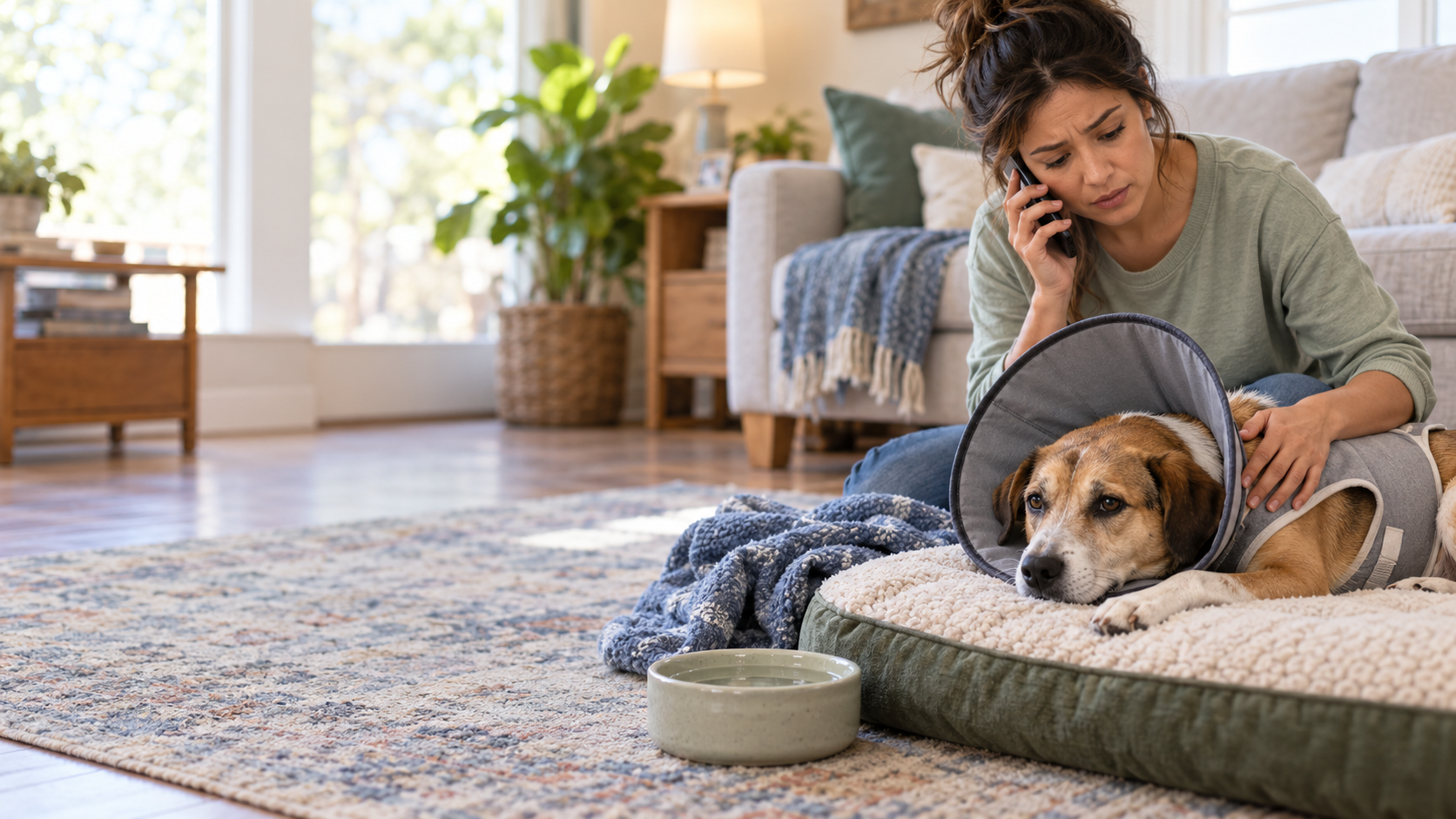
<p>Recovery looks different for every pet. Your discharge instructions explain what to expect after the procedure, how to give medicines, and which activities to restrict. Keep them handy, along with your clinic’s number and its recommended emergency hospital’s details.</p><p>Check your pet regularly. Look for changes that are unexpected, worsening, or outside the recovery timeline your veterinary team described.</p>
When to seek emergency care
<p>Go to an emergency veterinary hospital for:</p><p>• Labored breathing, gasping, or open-mouth breathing.</p><p>• Collapse, unresponsiveness, difficulty waking, or sudden inability to stand.</p><p>• A seizure, heavy bleeding, or rapid, severe deterioration.</p><p>• Pale, white, blue, or gray gums, especially with weakness.</p><p>• Repeated attempts to urinate with little or no urine.</p><p>Call ahead while arranging transport. Do not delay leaving to wait for a callback or for your usual clinic to reopen.</p>
Protect the incision and support healing
<p>Inspect the incision daily. Mild bruising or swelling may be expected after some procedures; worsening changes need advice. Prevent licking and chewing with the prescribed collar or recovery equipment. Do not apply creams or disinfectants unless instructed.</p><p>Keep bandages clean and dry, and do not adjust or remove them yourself unless directed. Avoid bathing and swimming until your veterinary team gives clearance.</p>
Stick to the medication and activity plan
<p>Give medicines exactly as prescribed. Do not add human painkillers or use another pet’s medication, or change a dose without veterinary advice. If a dose is missed or your pet vomits after taking it, ask what to do rather than automatically repeating or doubling it.</p><p>Provide a quiet, comfortable resting space. Follow restrictions on running, jumping, stairs, and play, even when your pet seems eager to resume activity. For dogs, outdoor trips may be limited to brief toilet breaks on a leash. Keep scheduled rechecks.</p>